















A vehicle does not wear out all at once. It wears out in patterns — predictable groupings of symptoms that trace back to how specific components fail under heat, friction, vibration, and chemical stress. Learning to read those patterns is the difference between spending $800 on a water pump at 95,000 miles and spending $4,200 on a cylinder head because the water pump failed, the engine overheated, and the gasket let go.
For buyers shopping used vehicles and for owners deciding whether to keep repairing or move on, wear patterns matter more than the odometer number itself. A 180,000-mile Toyota with disciplined maintenance records often outlives a 90,000-mile vehicle that skipped every fluid change. This article walks through the diagnostic framework for recognizing wear patterns early, then dives into the component-level specifics for the engine, transmission, suspension, cooling, electrical, and braking systems. It closes with a dedicated look at how electric vehicles age — because the familiar wear patterns of the last century do not map cleanly onto battery packs, inverters, and permanent-magnet motors.
Why Wear Patterns Matter More Than Mileage Numbers
The common shorthand — “100,000 miles is a lot” — is losing meaning. Modern engines routinely run past 200,000 miles when the oil, coolant, and transmission fluid are serviced on schedule. What actually determines a vehicle’s remaining useful life is the shape of its wear curve, which depends on three things: the specific components’ failure windows, how closely the owner followed the maintenance schedule, and the cost ratio between accumulated repairs and remaining value.
Those three factors produce three dramatically different outcomes, and the cost divergence between them widens the farther past 100,000 miles the vehicle goes.
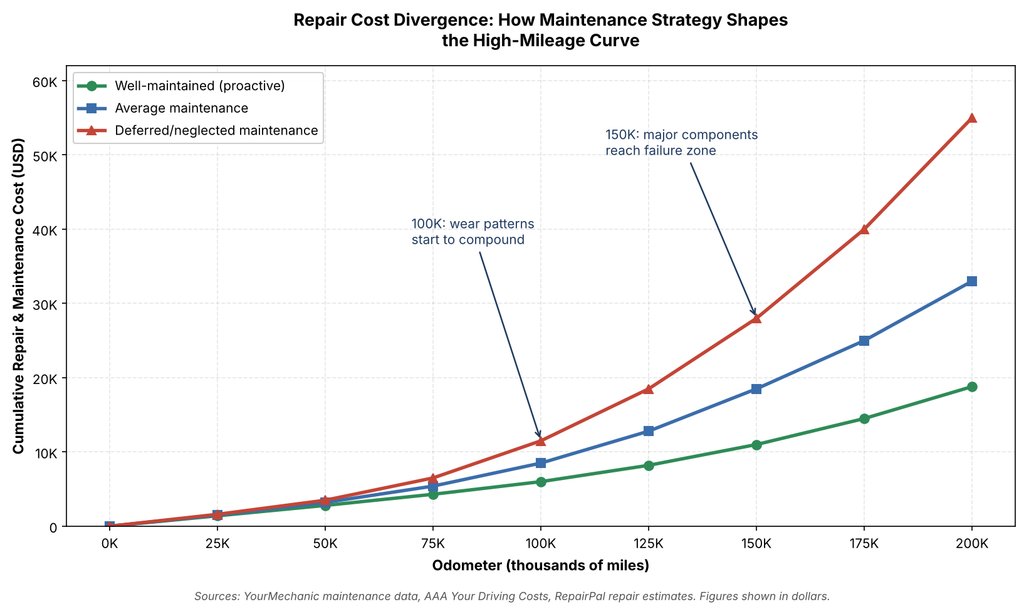
A proactively maintained vehicle — one where the owner changed transmission fluid at 60,000 miles, replaced the timing belt on schedule, flushed the coolant every 30,000 miles, and addressed small oil seepage before it became a gasket failure — tends to run with roughly $19,000 in cumulative out-of-pocket costs by the 200,000-mile mark. A neglected vehicle, by contrast, can rack up closer to $55,000 because small deferred problems cascade into major ones. The average vehicle sits between the two, closer to $33,000 over 200,000 miles, which works out to about $2,500 per year on top of insurance, fuel, and depreciation. The AAA figure for maintenance, repair, and tire costs on an average car runs about 10.13 cents per mile, which aligns with that curve.
The 100,000-mile mark is where wear patterns begin to compound rather than appear in isolation, and 150,000 is where major components reach their statistical failure windows. Recognizing which pattern applies to a specific vehicle depends on knowing what to inspect and when to act.
The Diagnostic Framework: Four Wear Pattern Categories
Rather than tracking dozens of components individually, experienced technicians group symptoms into four pattern categories. Each category points toward a distinct failure mode and a different urgency level.
Fluid-loss patterns show up as stains on the driveway, drops in reservoir levels, or oil-film buildup on engine seams. Small weeping from a valve cover gasket at 120,000 miles is cosmetic and routine. The same weeping from a rear main seal is a $900–$1,500 labor-heavy job because the transmission has to come out to reach it. An owner who notices seepage early can choose whether to address it, monitor it, or budget for it — but ignoring it long enough to run the engine low on oil turns a seal into a bearing failure.
Noise patterns include grinding, whining, clunking, and clicking, each of which points to a specific type of wear. A rhythmic clunk at low speed that disappears above 20 mph usually traces to a worn CV joint or control-arm bushing. A whine that rises with engine speed often means a failing water pump bearing or power-steering pump. A metallic grinding on brake application means the pads are gone and the rotor is now the friction surface — turn that into a $300 pad-and-rotor job by acting within a week, or a $900 caliper-and-rotor job by waiting a month.
Performance-degradation patterns are the hardest to catch because they develop slowly. Fuel economy that drifts down 2 mpg over six months, acceleration that feels slightly lazier than it did a year ago, or shifts that lag half a second on the 1-2 upshift all indicate systems operating below spec. Clogged fuel injectors, a dying oxygen sensor, a slipping transmission, or carbon-fouled intake valves all produce this slow drift. The repair cost scales from under $200 for an injector cleaning to $4,000+ for a transmission rebuild, which is why early recognition matters.
Structural and corrosion patterns are the ones that end a vehicle’s life quietly. Rust on brake lines, subframes, suspension mounting points, and rocker panels doesn’t trigger a check-engine light and rarely produces an obvious symptom until something fails. Buyers shopping high-mileage vehicles in salt-belt regions should treat frame and suspension corrosion as the primary filter — a drivetrain can be rebuilt, but a rotted subframe usually totals the car. The Used Car Reliability by Region article covers the regional patterns in detail.
The Component Deep-Dive: Where Things Actually Break
The framework above explains how to read symptoms. The chart below shows when specific components statistically begin to fail, which tells owners and buyers where to focus pre-purchase inspections and maintenance budgets.
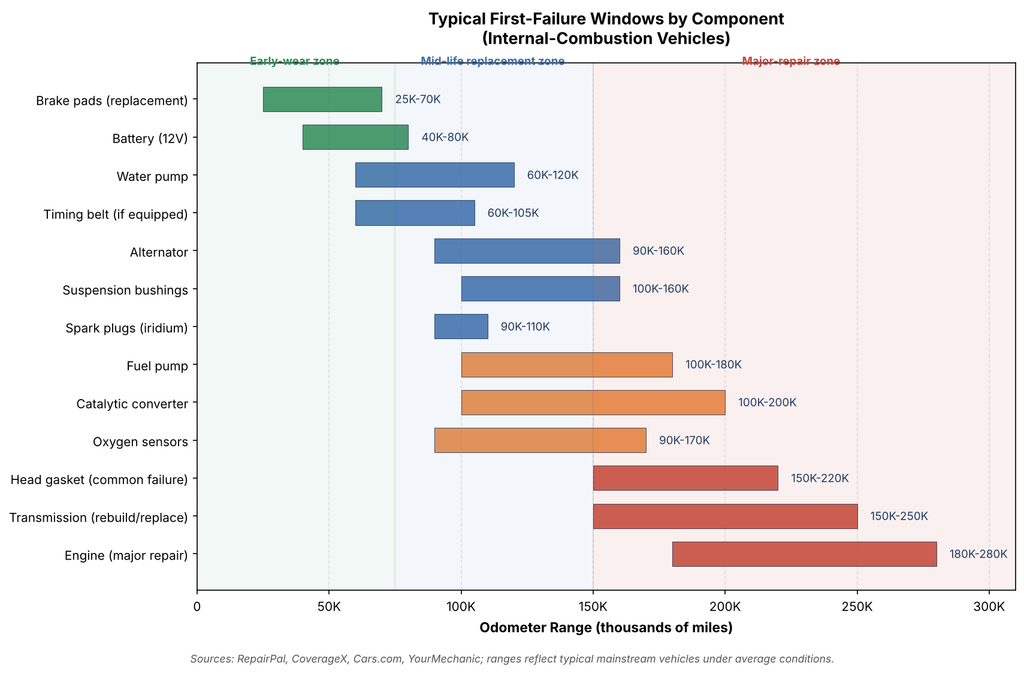
The ranges reflect typical mainstream vehicles under average driving conditions. Severe climates, stop-and-go urban driving, and towing all shift the failure windows earlier. What follows is a system-by-system breakdown of what to expect.
Engine: Internal Wear Follows a Predictable Order
Engine wear starts at the top and works down. Valve cover gaskets and spark-plug tube seals are typically first to seep, often between 90,000 and 140,000 miles. Carbon buildup on intake valves — a particular problem on direct-injection engines without a port-injection assist — can noticeably hurt fuel economy and cold-start smoothness in the same window. Walnut-shell blasting to clean the valves runs $400–$700 and is worth considering on direct-injected Audis, Volkswagens, BMWs, and Hyundais at around 100,000 miles.
The timing system is the highest-stakes decision in this era. On engines equipped with a timing belt, the manufacturer’s replacement interval — typically 60,000 to 105,000 miles — is not optional guidance. A broken belt on an interference engine bends valves, damages pistons, and often costs $4,000–$7,000 to repair, which exceeds the value of most 150,000-mile vehicles. Timing chains, used on the majority of modern engines including nearly all Toyota, Honda, Ford, and Hyundai mainstream models, are designed to last the life of the engine but can stretch, especially on engines run on extended oil-change intervals. Stretched chains throw check-engine codes for cam-crank correlation and are a $1,800–$3,000 repair on most V6s.
Head gaskets become a real risk after 150,000 miles, particularly on aluminum-head engines that have been overheated even once. The Subaru boxer engine, the pre-2015 Hyundai/Kia Theta-II four-cylinder, and several older BMW inline-sixes have documented gasket vulnerabilities in this window. Repair costs run $1,500–$3,500 per RepairPal estimates, with the labor dominating the bill because the head has to come off.
Full engine rebuilds or replacements typically arrive in the 180,000–280,000-mile window, with Toyota, Honda, and Lexus mainstream engines skewing toward the far end of that range and turbocharged four-cylinders from any brand often arriving earlier. A long-block replacement runs $5,000–$10,000 for mainstream vehicles.
Transmission: The Second Most Expensive Decision
Modern automatic transmissions — 8-speed, 9-speed, and 10-speed units from ZF, Aisin, and in-house designs from Ford, GM, and Hyundai — are more complex and more sensitive to fluid condition than the 4-speeds they replaced. Transmission fluid degrades under heat, and heat is cumulative over tens of thousands of miles.
The most common wear pattern is a 1-2 or 2-3 shift that becomes slightly delayed, then develops a brief flare where engine RPM climbs before the gear engages. This indicates worn clutch packs or failing shift solenoids and is the point of no return on an untouched transmission — a fluid change at this stage can actually accelerate the failure because fresh fluid dislodges clutch material that was still providing friction.
Owners who followed a 30,000–60,000-mile fluid change schedule can see 250,000+ miles out of most transmissions. Owners who followed the manufacturer’s “lifetime fluid” claim — which several brands used in the 2010s to reduce stated maintenance costs — often see transmission failures starting around 120,000 miles. The CoverageX repair data puts rebuilt transmissions at $2,300–$6,000 installed, with new units at $3,800–$8,000. CVT transmissions used by Nissan, Subaru, and Honda in various applications have their own failure pattern — shudder on light acceleration, then whining, then slip — and typically cost similar amounts to rebuild. The Hidden Costs of Owning an Older Vehicle article breaks down the long-term ownership math on these decisions.
Suspension, Steering, and Brakes
Suspension wear is dominated by rubber degradation. Bushings on control arms, sway bars, and subframe mounts dry out and crack between 100,000 and 160,000 miles, producing clunks over bumps and vague steering feel. Replacement runs $400–$1,200 depending on how many bushings are failing and whether they can be replaced individually or require full control-arm assemblies.
Struts and shocks lose damping gradually and are usually overdue by 100,000 miles, though many owners don’t notice because the decline is slow. A four-corner strut replacement on a mainstream sedan runs $800–$1,600 and often restores a vehicle’s ride and handling to near-new condition — one of the highest-return repairs on a high-mileage car.
Wheel bearings announce themselves with a hum that rises with speed and often changes with cornering load. Front bearings typically fail first, between 100,000 and 150,000 miles, at $400–$700 per side installed. Rear bearings on front-wheel-drive vehicles can last the life of the car or fail at similar intervals depending on sealing design.
Brakes follow a usage-dependent rather than mileage-dependent curve, with pads needing replacement every 25,000–70,000 miles and rotors every two to three pad replacements. The brake-fluid flush interval of every 1–2 years is one of the most commonly neglected services and the one that most often causes caliper failures from internal corrosion.
Cooling, Electrical, and Fuel Systems
The cooling system is the sleeper risk on high-mileage vehicles. Hoses go brittle and rupture between 100,000 and 150,000 miles. Water pumps on most modern engines have design lives of 90,000–150,000 miles and begin weeping from the weep hole before they fail outright — spotting a drip under the front of the engine is the warning. Radiators develop pinhole leaks at the plastic-to-aluminum crimp seams, often around 120,000–180,000 miles.
The reason cooling-system vigilance matters out of proportion to its direct repair cost is that an overheating event can total the engine. A sustained overheat warps the aluminum cylinder head, which costs more to fix than most 150,000-mile cars are worth.
Alternators typically fail between 90,000 and 160,000 miles with a warning light and sometimes a dying battery. Replacement runs $450–$1,000 for most mainstream vehicles, higher for luxury brands. Starters follow a similar curve. The 12V battery itself needs replacement every 3–5 years regardless of mileage.
Fuel pumps and injectors become common failure points after 100,000 miles, especially on vehicles run on consistently low fuel levels, which forces the pump to work harder and run hotter. Fuel-pump replacement runs $900–$1,100 per the YourMechanic cost data. Oxygen sensors degrade gradually and should be considered consumables in the 90,000–170,000-mile window; a failing O2 sensor costs $200–$400 per sensor to replace and typically pays for itself within a year through recovered fuel economy.
Catalytic converters have become the most expensive single sensor-cluster repair on many vehicles, with replacement running $1,000–$3,500 on mainstream cars and considerably more on luxury models. Converter failures are often triggered by other upstream problems — rich fuel mixtures, misfires, oil consumption — that destroy the catalyst substrate.
The EV High-Mileage Story Is Fundamentally Different
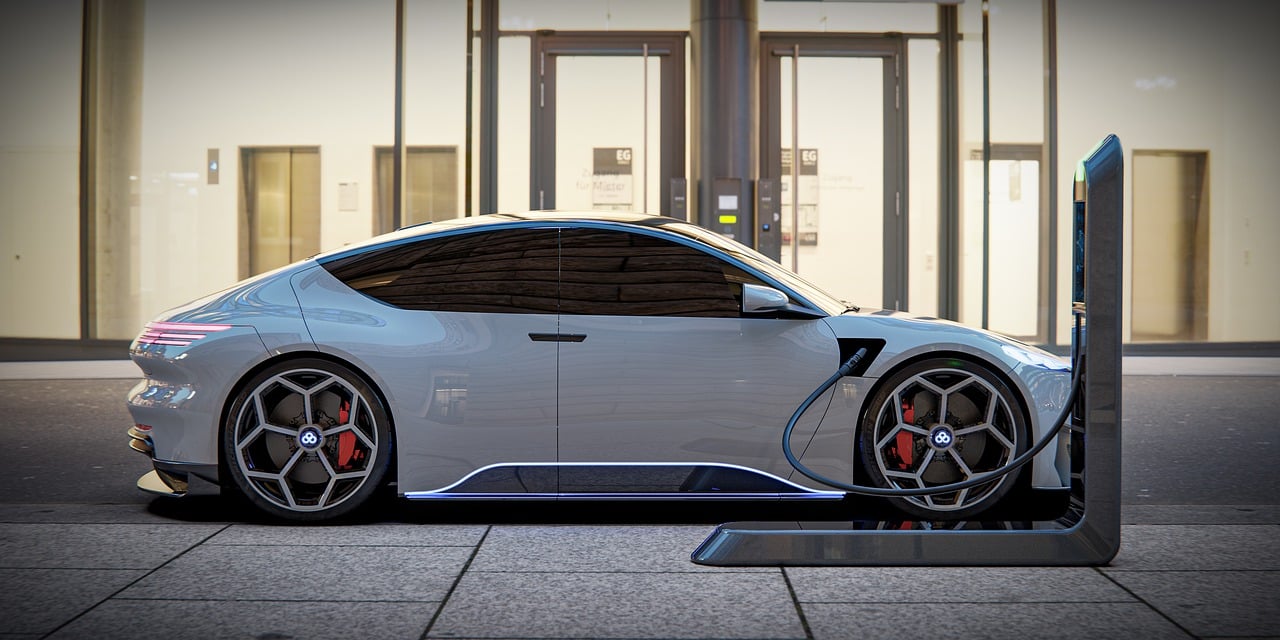
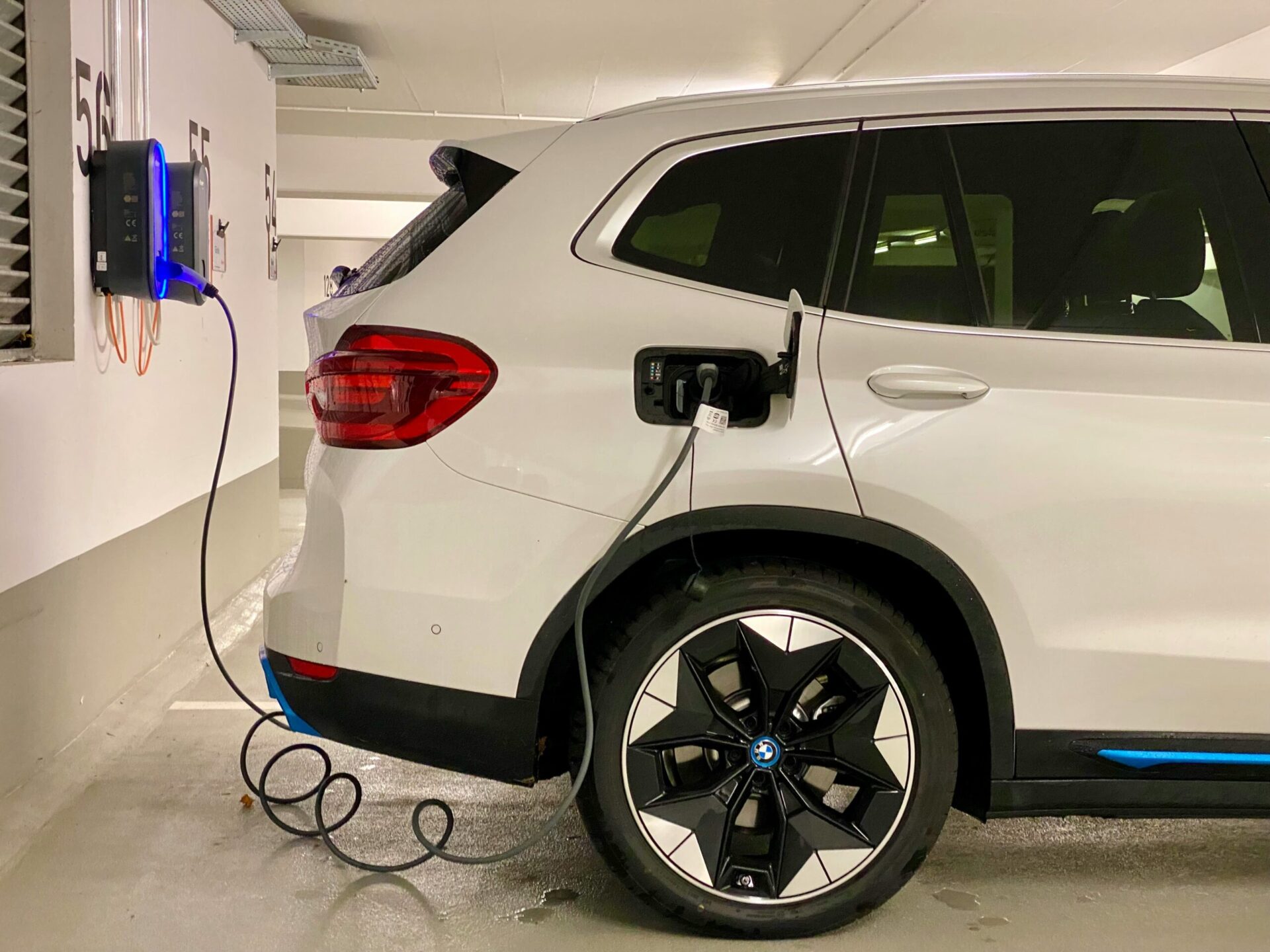
Electric vehicles are entering their own high-mileage era, and the wear patterns they exhibit have almost nothing in common with the ICE patterns described above. There is no oil to burn, no transmission fluid to degrade, no timing belt, no exhaust system, no spark plugs, no catalytic converter, no coolant for an engine block, and no injectors. There is a battery pack, an electric motor or two, an inverter, a reduction gear, a thermal-management loop, and the same brakes, suspension, bushings, bearings, and tires as any other vehicle.
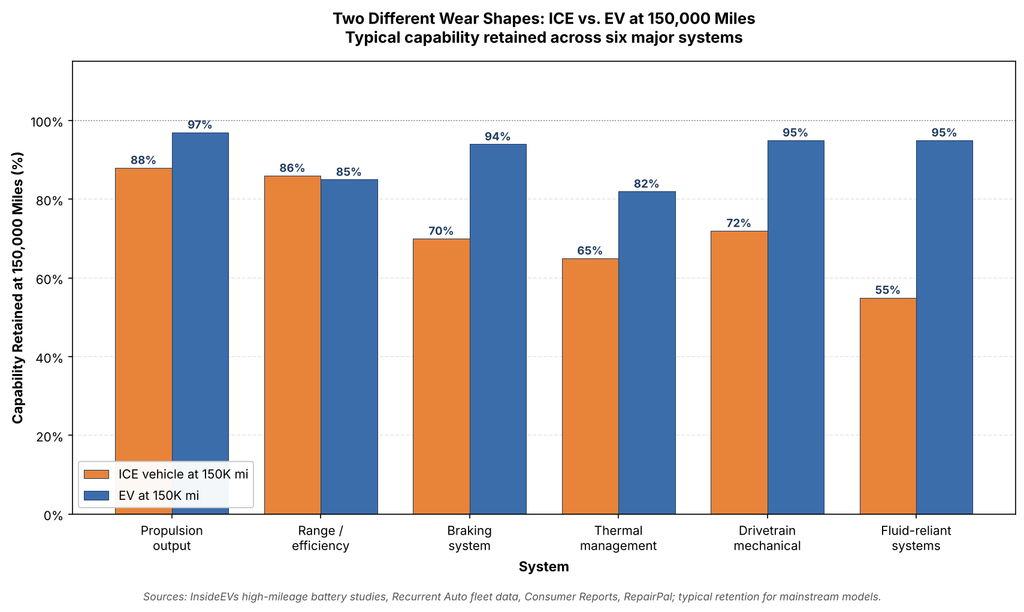
The battery is the EV’s defining wear component, and recent data has upended earlier assumptions about how it ages. A Recurrent Auto fleet study of over 20,000 Tesla Model 3 and Model Y vehicles found that at 150,000 miles, the average EV retains 81–91% of its original range depending on chemistry and climate. A high-mileage Tesla Model 3 used as a taxi reached 217,500 miles with 88.5% battery capacity and over 300 real-world miles of range. One Model S in the UK passed 430,000 miles on its original battery and motors, losing about 65 miles from its original range rating. Tesla’s own projections suggest about 12% average degradation at 200,000 miles for its nickel-based packs.
The chemistry matters. Lithium iron phosphate (LFP) packs — standard on the base Tesla Model 3 since 2021 and on the BYD lineup (BYD is not sold in the USA) — show over 90% state of health at mileages where nickel-based packs are at 75–82%. One Model 3 LFP car reached 189,000 miles at approximately 91% capacity despite being fast-charged over 90% of the time. The thermal management design matters too: the air-cooled Nissan Leaf packs from the 2011–2017 generation show the worst high-mileage results of any mainstream EV, which traces to the cooling approach rather than cell chemistry. The How Extreme Temperatures Affect EV Battery Health and How EV Thermal Management Affects Performance articles cover this in detail.
Motors are the next wear question. Permanent-magnet motors — used by Tesla, Hyundai, Kia, Ford, and most others — have no brushes, no commutator, and minimal mechanical wear. The main failure modes are bearing wear and coolant leaks into the stator windings. Early Tesla Model S large drive units from 2012–2015 had documented failures by 60,000 miles, with later revisions resolving most of the issues. Modern EV motors from 2018 onward are tracking toward 300,000+ mile service lives based on the data available so far.
Regenerative braking fundamentally changes brake wear. EV brake pads often last 100,000–150,000 miles because the physical brake system handles only the final seconds of stopping and emergency braking. The trade-off is that rotors can rust from lack of use, especially in wet climates, requiring periodic hard-braking cycles to clean them.
The components EVs do share with ICE vehicles — suspension bushings, wheel bearings, control arms, 12V battery, HVAC compressor — wear on roughly the same curves described above. Rivian, Tesla, Lucid, and the newer Ford, Hyundai, and Kia EVs all use suspension hardware similar to their ICE counterparts.
The high-mileage EV cost pattern looks very different from ICE. There are no $4,000 transmission jobs because there is no transmission. There are no $3,500 head gaskets because there is no head. The headline risk is a battery pack replacement, which runs $12,000–$20,000 on most mainstream EVs out of warranty — a figure that sounds catastrophic but applies to a decreasing percentage of vehicles as battery longevity data improves. Most eight-year battery warranties guarantee 70% capacity retention, and the fleet data suggests the typical pack significantly outperforms that floor.
The Repair-Versus-Replace Decision
Every high-mileage owner eventually faces the question: fix this one or buy another? The useful framework is to compare the cost of the current repair plus the next 12 months of expected repairs against the cost of financing a replacement. On a vehicle worth $6,000 with a $4,500 transmission bill, the math usually favors replacement — not because the current repair is unreasonable but because the next $3,000 repair is probably 18 months away.
The exceptions are vehicles with documented long-term reliability — the 4Runner, Land Cruiser, Camry V6, Accord V6, Tacoma, Highlander, and certain Lexus models — where owners routinely invest in major repairs at 200,000+ miles because the remaining service life justifies it. Tesla owners making the same calculation now, with 300,000-mile data points in hand, often choose to replace a failed drive unit rather than trade the car.
Regional conditions matter too. A 150,000-mile vehicle in Phoenix with clean undercarriage photos is a different proposition than the same vehicle in Buffalo with visible frame rust, and regional buying patterns have become a major filter for serious used-car shoppers.
What to Watch For: A Practical Checklist
Reading wear patterns well comes down to a disciplined set of habits that apply to both buyers inspecting candidate vehicles and owners maintaining their own:
- Walk around and under the vehicle looking for fluid traces, obvious rust at suspension mounting points, and tire wear patterns that suggest alignment problems
- Note any dashboard warning lights and ask for recent diagnostic scan results — a used-car dealer who resets codes before a test drive is a signal
- Listen for bearing hum rising with speed, pulley whine at idle, and any clunks over bumps or during low-speed turning
- Check transmission response: a long delay from Park to Drive, a 1-2 shift flare, or a reverse engagement thump indicate internal wear
- Verify service records for transmission fluid, coolant, and timing-belt replacements at the manufacturer’s intervals
- On EVs, check the battery state-of-health reading if the vehicle exposes it, and review DC fast-charging frequency if the data is available
- Budget for one major repair every 25,000–40,000 miles past 100,000 — not necessarily a $5,000 repair, but reliably something
The Takeaway
High-mileage wear is not random. It follows patterns that technicians, enthusiasts, and long-term owners have mapped over decades, and the maps work. Water pumps weep before they fail. Transmissions flare before they slip. Head gaskets seep before they blow. The gap between a well-kept 200,000-mile vehicle and a worn-out 120,000-mile vehicle comes down to whether someone was paying attention to the patterns when they first appeared.
The economics of high-mileage ownership have also shifted more than most buyers realize. Modern engines, modern transmissions, and particularly modern EV drivetrains have meaningfully longer service lives than their 1990s or 2000s predecessors — but they also carry higher component replacement costs when things do fail. The math works best for owners who invest in proactive maintenance early and know where they are on the wear curve. For buyers, the pattern-reading skill is worth more than any single inspection: a high-mileage vehicle sold by someone who clearly understood its wear patterns is almost always a better buy than a lower-mileage vehicle whose history is a question mark.
Treat the odometer as a rough index, not a verdict. The real story is in the patterns.
External Sources
- AAA Your Driving Costs — Average Per-Mile Repair & Maintenance
- RepairPal — Repair Cost Estimates and Reliability Ratings
- CoverageX — High-Mileage Car Maintenance Guide
- YourMechanic — Mileage-Based Service and Repair Costs
- Cars.com — Timing Belt Replacement Intervals
- InsideEVs — What Ultra-High-Mileage EVs Teach Us About Battery Degradation
- InsideEVs — Tesla Model 3 150,000-Mile Owner Review
- CleanTechnica — 150,000 Miles on a 2019 Tesla Model 3 Long Range
- AutoEvolution — Tesla Projects 12% Battery Degradation at 200,000 Miles
- Consumer Affairs — Scheduled Car Maintenance Costs
- Simply Fleet — Vehicle Mileage vs. Repair Costs
- Click Orlando — America’s Car Maintenance Debt Report
- Drive Tesla Canada — EV Battery Longevity Study
←How Trade-In Equity Affects Loan Decisions





















Leave a Reply
You must be logged in to post a comment.